
Solutions for Powder Handling
Simutron’s Solutions for Powder Handling allow engineering teams to simulate the behaviour of powders, granules, and fine bulk materials across storage, feeding, and conveying equipment. Using Simcenter EDEM’s advanced Discrete Element Method (DEM) technology, engineers can analyse flow behaviour, detect segregation risks, and optimise handling equipment before manufacturing or plant modifications are implemented.
With this solution, you can:
- Improve powder flow reliability in hoppers and silos
- Optimise feeder accuracy and throughput stability
- Identify segregation and particle separation issues
- Analyse conveyor loading and transfer performance
- Reduce blockages, bridging, and material build-up
Request a Powder Handling Simulation Demo
SOLUTIONS FOR POWDER HANDLING
Engineering-Level Insight into Powder Flow and Material Transfer
Powder handling processes often involve complex material behaviours that are difficult to predict using traditional engineering calculations. Cohesion, particle size distribution, friction, moisture content, and equipment geometry all influence how powders flow through feeders, hoppers, conveyors, and transfer points.
Simutron’s Solutions for Powder Handling use Simcenter EDEM to simulate particle interactions at the granular level. Engineers can visualise how powders behave inside equipment under real operating conditions, helping teams diagnose flow problems, optimise equipment design, and reduce costly trial-and-error testing in production environments.
SOLUTIONS FOR POWDER HANDLING
Key Capabilities for Powder Handling System Simulation

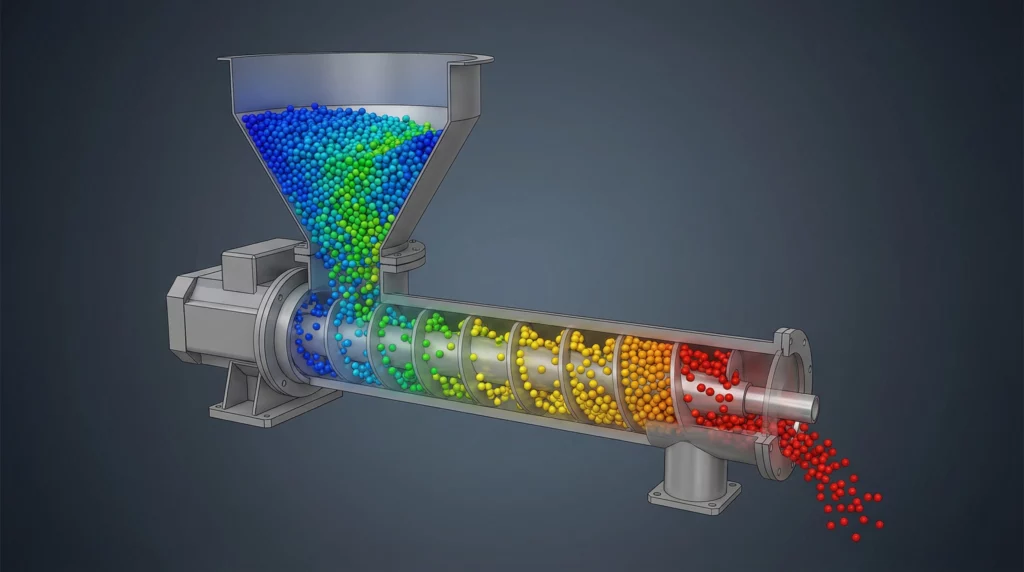
1. Hopper Discharge and Flow Behaviour
Powder flow inside hoppers and silos can be affected by arching, bridging, and material compaction. DEM simulation enables engineers to understand how particle properties influence discharge behaviour.
Engineering teams can:
Visualise powder discharge patterns from hoppers
Detect arching and ratholing conditions
Analyse the influence of outlet geometry
Evaluate the impact of particle cohesion and friction
Optimise hopper design for consistent mass flow
2. Feeder Throughput and Dosing Performance
Feeders are responsible for delivering precise and stable material flow into downstream processes. Simulation enables performance evaluation before physical equipment adjustments are made.
Teams can:
Analyse material flow into screw or belt feeders
Evaluate dosing accuracy and variability
Study material packing behaviour during feeding
Compare feeder design alternatives
Improve throughput stability and mass flow control
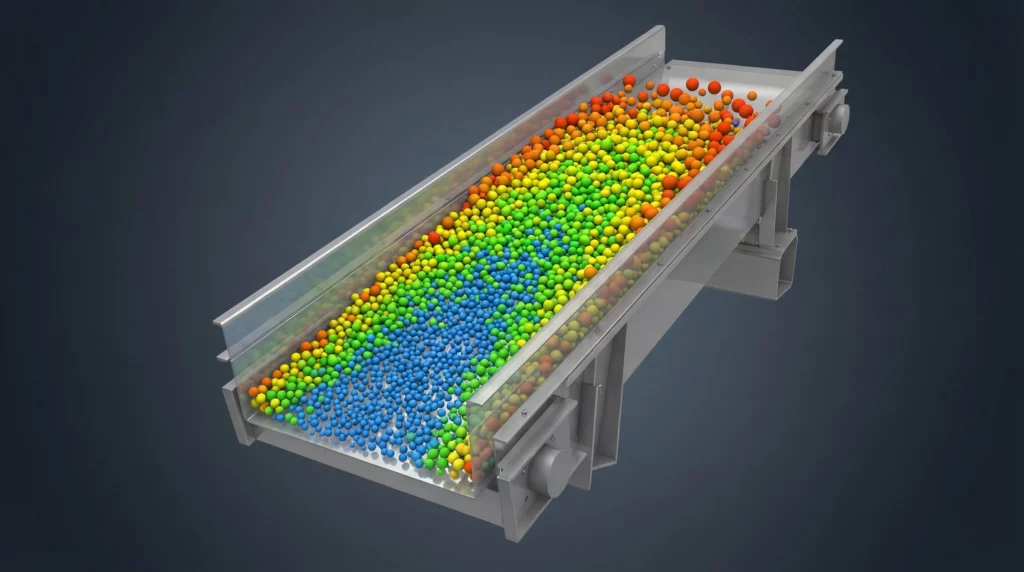
3. Powder Segregation and Particle Separation
Segregation can occur when powders with different particle sizes, shapes, or densities move through handling equipment. Simulation helps identify when and where separation occurs.
Engineering teams can:
Track particle movement across equipment surfaces
Analyse segregation caused by vibration or flow velocity
Visualise particle size distribution changes
Study the influence of equipment geometry
Improve process design to reduce separation effects

4. Conveyor Loading and Transfer Efficiency
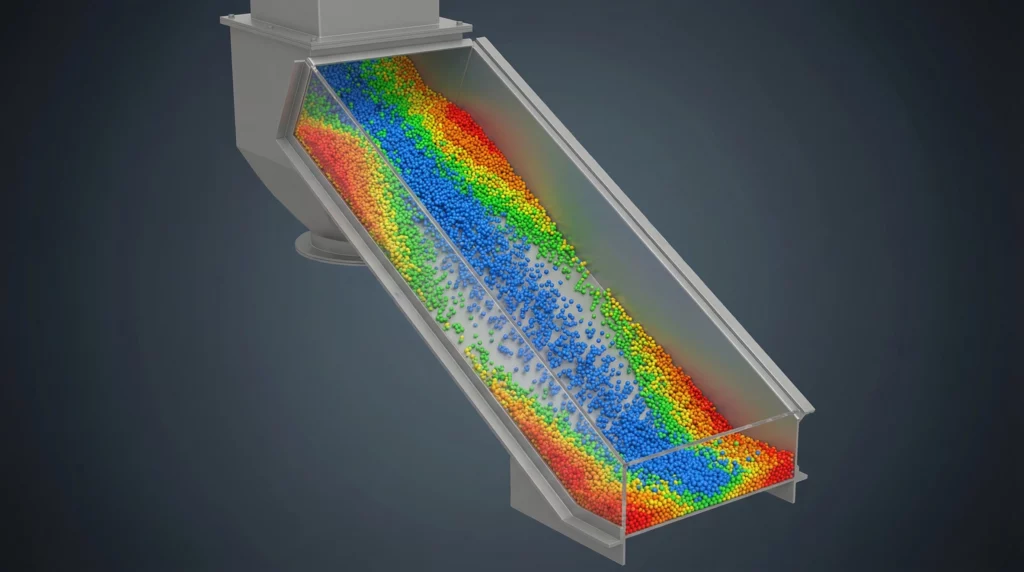
Material transfer points are common sources of spillage, uneven loading, and equipment wear. DEM simulation provides detailed insight into these interactions.
Teams can:
Analyse powder loading onto conveyor belts
Study material impact behaviour at transfer points
Detect uneven loading zones across belts
Evaluate chute and transfer design performance
Improve conveyor system efficiency and reliability
5. Powder Build-Up and Equipment Fouling
Powders can accumulate on surfaces inside processing equipment, leading to contamination risks, downtime, and maintenance challenges.
With simulation, engineers can:
Identify zones where powder accumulation occurs
Study adhesion effects and particle sticking
Analyse material interaction with equipment surfaces
Optimise equipment angles and geometries
Reduce cleaning cycles and maintenance requirements
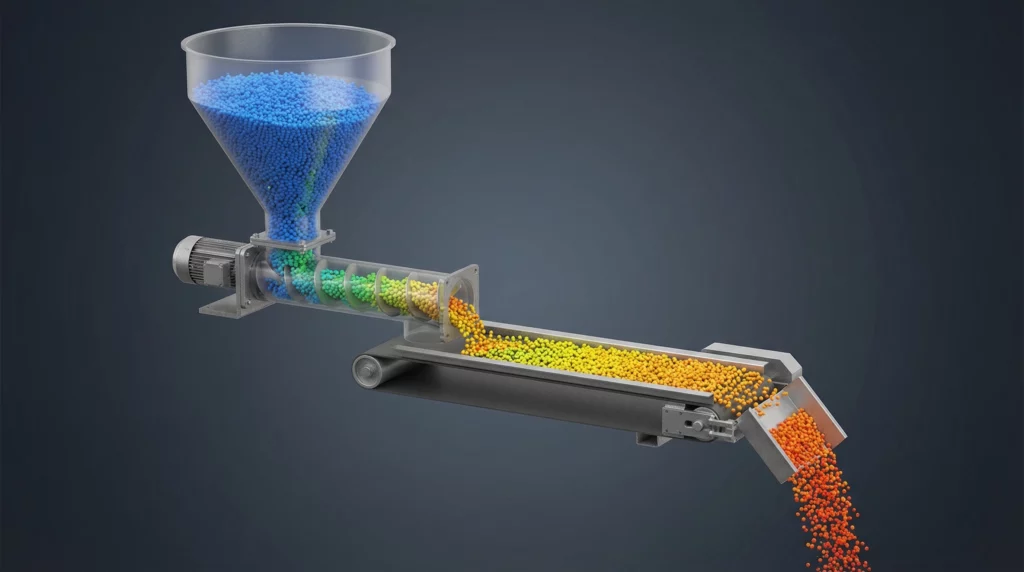
6. Integrated Powder Handling Process Optimisation
Powder handling systems often involve multiple interconnected components including hoppers, feeders, conveyors, and transfer chutes. DEM simulation allows engineers to analyse these systems together.
Engineering teams can:
Evaluate complete powder transport systems
Compare alternative equipment layouts
Analyse interactions between handling stages
Reduce process bottlenecks and material losses
Improve overall material flow stability across the system
Why choose simutron
Expert solutions with unmatched support
Simutron partners with Simcenter to offer powerful, flexible solutions tailored to meet the demands of modern engineering. With advanced technology, dedicated support, and flexible licensing, we equip your team with the tools needed to innovate, optimise processes, and stay competitive.
Expert Support Team
Receive guidance from engineering experts to maximise your tools.
Multi-Disciplinary Solutions
Benefit from solutions in structural, fluid, EM, and data analysis
Get in touch with us
Interested in learning more about how Simutron can support your engineering goals? Fill out our contact form, and one of our experts will reach out.
Get in touch with us
Interested in learning more about how Simutron can support your engineering goals? Fill out our contact form, and one of our experts will reach out.